• Home
  • Distributed Defense
  • CobraJet
  • Navigation
  • C-UAS Munitions
  • Testing & Videos
  • News

news

AUVSI Member Spotlight
September 4, 2025 SkyDefense, based in Colorado, manufactures CobraJet™, a low-cost, AI-powered fighter drone and interceptor designed to neutralize hostile uncrewed vehicles. Value of SkyDefense’s AUVSI MembershipNick Verini, SkyDefense’s President and CEO, says the combination of insights, networking, and visibility is why their organization is an AUVSI member:“AUVSI keeps us ahead of the curve with the latest technology and use cases, makes it easy for us to meet new potential partners, investors, suppliers, and customers, and will help promote us and amplify our success in our professional community.”
Exciting Industry DevelopmentsAccording to Verini, the CobraJet platform is made possible by recent developments in machine learning:“[It’s] a fighter drone and interceptor that can be armed with air-to-air non-lethal or lethal munitions. For us, the ability to equip our jets with low-cost, on-board AI/ML capability is one of the most exciting developments. This on-board intelligence empowers our CobraJets to detect, identify, track, and intercept hostile drone swarms autonomously, even in an EW environment. AI/ML hardware and software systems will improve dramatically over the next few years, giving our CobraJets even more capabilities, such as natural language communications between the jet and Mission Control.” Industry ChallengesVerini notes that autonomous jets introduce new threats to the safety of military personnel:“With autonomy comes risks of ‘friendly fire.’ When armed with lethal munitions, our jets become deadly unmanned flying weapons, and a human must remain in the loop to ensure that there are no ‘mistakes,’ either in the air or on the ground. We believe that the future ability of our jets and other unmanned aerial combat vehicles to communicate in natural language will help minimize this threat.”
SkyDefense’s Role in the Industry’s FutureVerini believes that innovations like the CobraJet platform will improve our ability to defend people and infrastructure from hostile uncrewed vehicles:“We envision our C-UAS systems will significantly lower the cost of mitigating hostile unmanned (aerial, surface, and ground) systems. [They will] protect public venues, infrastructure, military facilities, borders, ports, oil refineries, and power plants from attack. Even the “Golden Dome” missile and radar systems need protection from operators who could covertly move small UAS near a target and evade early detection.”
Pentagon Establishes Joint Interagency Task Force to Deliver Affordable C-sUAS Capabilities UAS Vision - C-UAS News on September 1, 2025 by The Editor.
Defense Secretary Pete Hegseth announced that he has directed Army Secretary Daniel P. Driscoll to formally establish a joint, interagency task force to counter hostile unmanned aerial systems, commonly referred to as drones. “Our job here at the Pentagon — when you think about it — is to prepare for the threats of the future and build a force to match them, and defeat them, and outpace them,” Hegseth said via a video message released to the public. “And there’s no doubt that the threats we face today from hostile drones grow by the day,” he added.Noting that hostile UAS are being operated overseas and at our borders while seeking to harm U.S. warfighters, bases and even the sovereignty of the national airspace, Hegseth said the new task force — Joint Interagency Task Force 401 — will be a unified team that will seek to bring together the best talent from multiple government agencies to counter UAS threats and restore control of the skies. “It’s called counter-UAS — counter-unmanned aerial systems — and America will be the best at it,” Hegseth said.Although the secretary did not comment on the estimated length of time before the task force will be operational, he did say the Pentagon is currently moving quickly to cut through bureaucracy and consolidate resources, so as to empower it with “the utmost authority to outpace our adversaries.”He added that DOD is working to deliver real solutions and ensure American airspace remains secure at home, abroad and anywhere troops are stationed. “They deserve to be defended by the best,” Hegseth said. To ensure that American airspace remains secure, Secretary Hegseth directed Secretary of the Army to formally establish the Joint Interagency Task Force 401 (JIATF 401) — a new, unified team that will bring together our best talent from across all agencies to counter these threats and restore control of our skies. The Task Force will report to the Deputy Secretary of Defense, to better align authorities and resources to rapidly deliver Joint C-sUAS capabilities to America’s warfighters, defeat adversary threats, and promote sovereignty over national airspace.Source: Department of Defense
Pentagon Forms New Task Force to Fast-Track Counter-Drone Capabilities
Defense News By Jen Judson - August 28, 2025 The Pentagon is scrapping its old playbook for defending against small drones, moving beyond years of evaluations and studies toward a model that comes with new money and authority geared to field capability faster, according to a Thursday memo from the defense secretary.The directive from Defense Secretary Pete Hegseth announced the formation of the Joint Interagency Task Force 401 (JIATF 401) to “better align authorities and resources to rapidly deliver [joint counter-small unmanned aircraft system] capabilities to America’s warfighters, defeat adversary threats and promote sovereignty over national airspace,” the memo states. Hegseth also directed the Army secretary to disestablish the Joint Counter-small Unmanned Aircraft Systems Office, or JCO, which was created in 2019 and led by the Army. It will cease to exist once JTIAF 401 is established, the memo notes.The unit that blends operational, acquisition and interagency roles under a single command will be empowered with procurement authority, flexible funding and streamlined personnel authorities, operating under the oversight of the deputy secretary of defense. The move comes as U.S. forces in the Middle East and Eastern Europe face increasingly sophisticated drone swarms from state and non-state actors. Cheap, disposable quadcopters and fixed-wing models have been used to knock out armored vehicles, overwhelm air defense and harass bases at a fraction of the cost of defending against them. Ukraine’s daring drone attacks against Russian warplanes on Russian soil in Operation Spiderweb earlier this summer served as a wake-up call in modern warfighting. The JCO made some headway by narrowing the Pentagon’s crowded field of more than three dozen drone defense prototypes to a handful of approved systems, running joint demonstrations at Yuma Proving Ground— which helped several companies gain traction in the military — and establishing common training and testing protocols. But critics say the office lacked the teeth to buy and deploy gear quickly and was hamstrung by the Pentagon’s budget cycle. The new task force aims to fix that. JIATF 401 will be able to direct procurement decisions, allocate up to $50 million per initiative and hire outside the normal federal process to pull in technical experts. It will also consolidate work on drone forensics, exploitation and replication programs and tie into the Defense Innovation Unit’s Replicator 2 initiative on mass-produced autonomous systems, according to the directive. Additionally, the task force will have 30 days after initiation to make recommendations on establishing a dedicated C-sUAS test and training range.The reorganization is designed to compress timelines from years to months.“We’re moving fast — cutting through bureaucracy, consolidating resources, and empowering this task force with the utmost authority to outpace our adversaries,” Hegseth said in a statement. The new task force could help reshape a growing market projected to reach tens of billions of dollars over the next decade. Companies that won spots in JCO-sponsored demos, from directed-energy and high-power microwave startups to electronic-warfare specialists, will now face a more centralized buyer with discretionary funding that could keep competition high and fast-paced.The task force will undergo a formal review after 36 months, giving Congress and the Pentagon a chance to assess whether the new organization delivers.
CobraJet Nvidia AI-powered drone killer takes out 'overwhelming enemy drone incursions' at up to 300mph
News - Tom’s HardwareBy Jowi Morales August 17, 2025
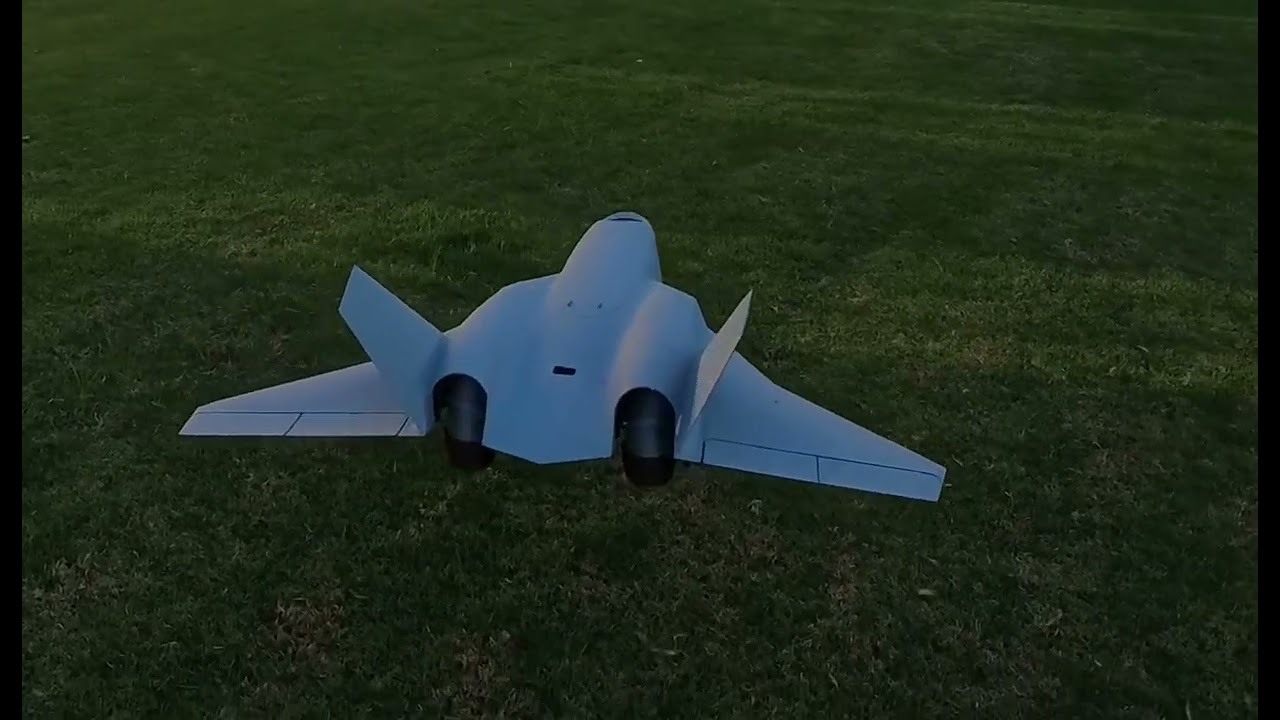
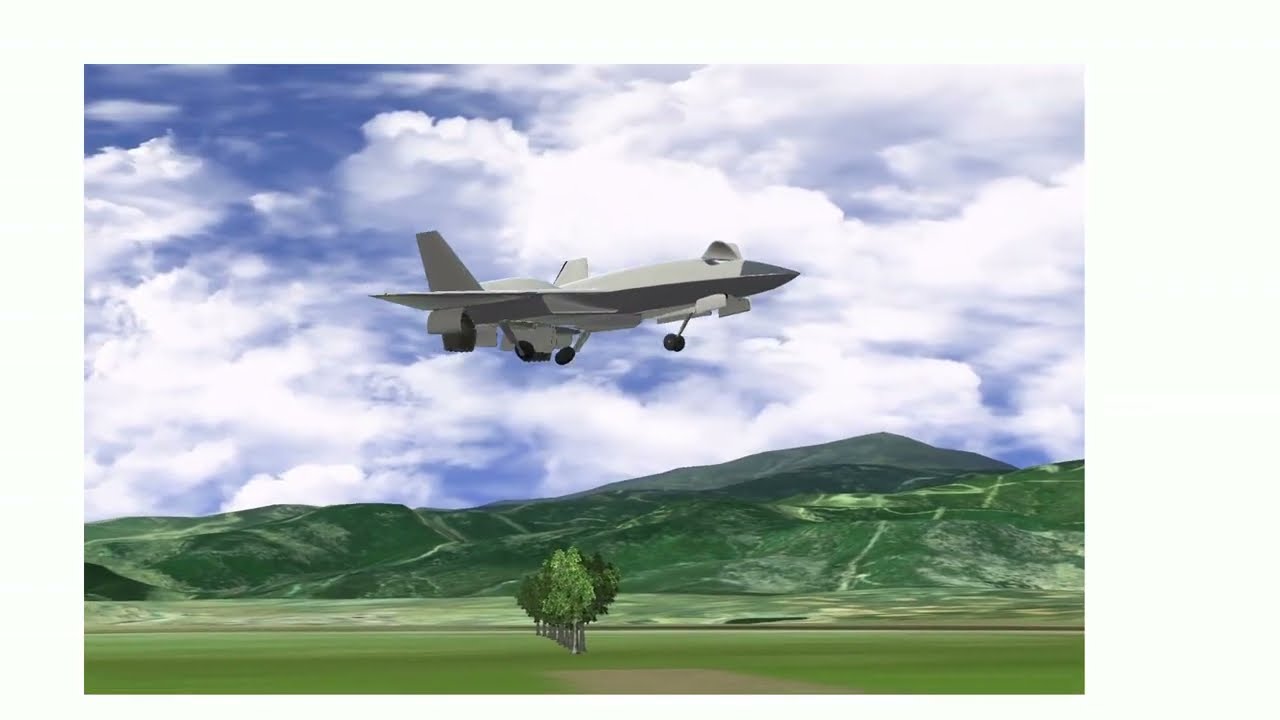
Defense startup SkyDefense LLC just launched an autonomous combat drone designed to take out enemy drone swarms at a much lower cost than traditional weapon systems. The company calls it the CobraJet — an uncrewed aerial vehicle (basically, a drone) designed for C-UAS (counter-unmanned aircraft system) missions. The drone combines Teledyne FLIR electro-optical and infrared sensors that do not contain restricted foreign parts, and Nvidia AI chips, allowing the drone to process the information that it sees with onboard sensors. A different kind of VRAMThe CobraJet is also equipped with its proprietary Visual Realtime Area Monitoring (VRAM) system, allowing ground commanders to monitor the drone during autonomous operations and communicate with and control it, if needed. This gives its operator the option to let it operate on its own during reconnaissance, patrol, and identification, but still have a human making decisions when required. It can also use the same technology to communicate with other CobraJet units, allowing them to act together as a single entity to protect against enemy swarms. Aside from its AI brain, the CobraJet also boasts an internal weapons bay and external hardpoints, allowing it to carry kamikaze drones, small missiles, or even fragmentation projectiles. It can also be modified to carry precision bombs and loitering munitions, making it a multirole drone. Its external design mimics that of the U.S.’s latest air superiority and multirole fighters, the F-22 Raptor and F-35 Lightning II, with vertical take-off and landing capabilities and thrust vectoring nozzles. This means it can operate from the back of a truck and have improved maneuverability, allowing it to go toe-to-toe with small and nimble drones. Asymmetric warfare answered?CobraJet is SkyDefense’s solution to the emerging threat of drone swarms on the modern battlefield. These small and cheap weapons are widely used in Russia’s invasion of Ukraine, with the defending Ukrainians effectively using drones to initially counter the larger Russian army. Today, both sides in the conflict use UAVs, and actions on the battlefield highlight the U.S.’s need to develop a cost-effective counter.While existing weapons like surface-to-air missiles and air-to-air missiles can engage drones, there’s often a huge mismatch in price between these two platforms. Missiles often cost between half a million to more than $4 million — while you can buy a cheap drone for just $200, with the more sophisticated ones, like Iran’s Shahed-136, only costing $20,000. You can also send up a platoon of combat choppers to engage a drone swarm with guns, but you’re risking several multi-million-dollar weapon platforms to combat cheap suicide drones.
“Our USA-made CobraJets can communicate and coordinate as a flight team, enabling them to operate as an AI-powered unmanned Air Force,” said SkyDefense LLC President Nick Verini. “This team approach increases the effectiveness of the squadron while also significantly reducing the costs of destroying a swarm of enemy drones.” SkyDefense LLC hasn’t released the unit cost of the CobraJet, but it’s going to be so much more affordable than the fighter jets it looks like, and the missiles they carry. The company is offering the drone to law enforcement, Homeland Security, and the U.S. military, giving them the ability to protect against hostile drone swarms without needing to spend copious amounts of money to take down such cheap weapons.
SkyDefense unveils CobraJet fighter drone and interceptor for C-UAS operations
C-UAS Hub By Jack Overell - August 15, 2025https://cuashub.com/en/content/skydefense-unveils-cobrajet-fighter-drone-and-interceptor-for-c-uas-operations/
SkyDefense Unveils CobraJet AI Fighter Drone for High-Speed Low-Cost Counter-UAS Operations
Defense Industry Europe – August 13, 2025https://defence-industry.eu/skydefense-unveils-cobrajet-ai-fighter-drone-for-high-speed-low-cost-counter-uas-operations/
U.S. AI combat CobraJet designed as a rapid and autonomous response to UAV proliferation.
Defense News Aerospace 2025August 12, 2025 According to information published by SkyDefense LLC on August 11, 2025, the Brighton-based defense technology company has revealed a new aerial platform aimed at strengthening defenses against hostile unmanned aircraft. Designed for rapid reaction in high-threat environments, the system is intended to safeguard critical infrastructure, secure national borders, protect forward operating bases, and ensure the safety of sensitive public areas. Its configuration and performance are tailored to deliver responsiveness and adaptability, allowing it to counter modern aerial threats with speed and precision.
The CobraJet’s propulsion system relies on Amprius high-performance batteries, providing extended operational endurance while minimizing both acoustic and thermal signatures. This low observability makes the drone difficult to detect and target, even when operating close to hostile airspace. Its Auterion AI-enabled autopilot integrates Teledyne FLIR NDAA-compliant EO/IR imaging sensors with embedded NVIDIA processors to deliver real-time target recognition and engagement calculations. The internal weapons bay and underbelly hardpoints can be configured for short-range air-to-air interceptors, micro-missiles, or proximity-fused fragmentation projectiles, while optional mission packages include precision-guided glide bombs and loitering munitions for targeting unmanned maritime craft or ground-based systems. Mission control is managed through SkyDefense’s proprietary Visual Realtime Area Monitoring (VRAM) system, which merges AI-enhanced image processing with encrypted, low-latency C2 communications. The VRAM interface supports both fully autonomous operations and human-in-the-loop control, allowing operators to make engagement decisions when required. When deployed in groups, CobraJets can function as an autonomous swarm, coordinating target allocation, sharing sensor data, and executing complex interception patterns. Integrated SmartVision navigation, reinforced by anti-jamming algorithms and passive visual geolocation, ensures the platform remains operational in GPS-denied or heavily contested electromagnetic environments. The modular architecture also enables rapid field upgrades, ensuring compatibility with evolving allied multi-domain command networks. From an operational and tactical standpoint, CobraJet is designed to fill a growing gap in layered air defense. The proliferation of small, agile, and inexpensive drones has exposed the limits of traditional ground-based air defense systems, which often struggle to economically intercept low-cost UAVs. CobraJet addresses this challenge by combining high speed, short takeoff footprint, and AI-driven targeting into a system capable of launching within seconds and intercepting multiple inbound threats before they can reach vulnerable assets. In urban defense, CobraJets could operate from rooftops or confined staging areas to protect government facilities or event venues. On the battlefield, they could accompany armored columns or act as forward airborne pickets to deny enemy UAV reconnaissance over maneuvering units. In maritime scenarios, their VTOL capability allows for deployment from small deck ships or offshore platforms, extending protective coverage beyond conventional radar range. Their ability to operate in swarms also enables saturation coverage, overwhelming enemy drone incursions with coordinated interceptions. Potential clients for CobraJet include armed forces seeking to modernize their integrated air defense systems with an affordable, rapidly deployable anti-drone layer, particularly those operating in regions where hostile UAV incursions are frequent. Homeland security agencies would benefit from its capacity to defend airports, power plants, government buildings, and public events against drone-based attacks or surveillance. Border security organizations could deploy CobraJets to patrol remote areas with limited radar coverage, providing a constant aerial deterrent against smuggling drones or surveillance UAVs. Special operations forces may value its portability and rapid launch capability for securing temporary forward positions or covert installations, while naval forces could integrate the system on frigates, patrol boats, or even amphibious ships to protect against reconnaissance and explosive-laden drones in littoral zones. Defense contractors offering integrated C2 solutions could also partner with SkyDefense to incorporate CobraJet into larger air defense ecosystems for allied militaries. The launch of CobraJet comes during a period of rapid expansion in the global drone industry, fueled in large part by operational lessons from recent high-intensity conflicts. The war in Ukraine has demonstrated the transformative role UAVs play in both reconnaissance and direct strike missions, with platforms ranging from small commercial quadcopters to long-endurance loitering munitions being deployed in vast numbers. This has triggered an urgent demand for scalable counter-drone systems capable of intercepting threats across multiple size classes and threat profiles. Drone use in Ukraine has also illustrated how inexpensive, widely available UAVs can inflict disproportionate damage when left unchecked, forcing militaries worldwide to re-evaluate air defense priorities. The market for counter-UAS technologies has consequently accelerated, with governments investing in systems that blend automation, precision targeting, and interoperability with broader defense networks. Industry analysts predict this segment will continue to grow sharply, with AI-powered interceptors like CobraJet representing a new category of agile, high-performance defensive assets. SkyDefense President Nick Verini emphasized that CobraJet units are engineered for scalable squadron deployment, offering an AI-enabled unmanned air combat force that can counter both isolated drone intrusions and coordinated swarm attacks at significantly reduced per-engagement costs. For mobile or expeditionary operations, SkyDefense offers a self-contained configuration in which the VRAM system is integrated into tactical or armored electric vehicles, enabling rapid relocation and concealed deployment. Operational testing of CobraJet and VRAM is scheduled at the Pendleton UAS Test Site later in 2025, where the system will undergo evaluation under realistic combat scenarios to confirm its performance in contested airspace.
CobraJet™ Fighter Drone and Interceptor Offers Low-Cost C-UAS Solution August 11, 2025 SkyDefense LLC, headquartered in Brighton, CO, unveiled its advanced AI-powered eVTOL fighter drone and interceptor, the "CobraJet™." This tactical, battery-powered autonomous aircraft is engineered to detect, track, identify, and neutralize enemy drones at high speeds exceeding 200 mph (320 km/h). Designed primarily for security applications, CobraJet™ defends against drone threats to critical infrastructure, borders, military bases, and public venues. Scalable and available in three trijet versions, V4 and V6 (Group 2), and V8 (Group 3), CobraJet™ features a 3D printed carbon fiber composite airframe inspired by the 5th-generation Lockheed F-35B and F-22 jets, and the future 6th generation F-47. Equipped with vertical takeoff and landing (VTOL) capability and thrust vectoring nozzles, the jet delivers exceptional agility and the ability to neutralize multiple fast-moving, evasive UAS with its on-board air-to-air weapons stored in its weapons bay or mounted underbelly. CobraJet™ is also capable of performing strike missions against unmanned ground or naval targets utilizing its present munitions or other air-to-surface weapons such as smart glide bombs. The interceptor's propulsion relies on electric duct fan (EDF) motors and Amprius high-performance batteries, while its Auterion AI-enabled autopilot and additional NVIDIA compute power, along with Teledyne FLIR NDAA-compliant cameras, ensure autonomous operations day and night. CobraJet™ can deploy from mobile platforms such as trucks, ships, or aircraft, adding flexibility to its operations. SkyDefense's Command System, known as VRAM (Visual Realtime Area Monitoring), combines AI-powered data analysis with a control interface that keeps human operators in the decision-making loop. This system enables CobraJet™ to operate seamlessly in contested electromagnetic environments, thanks to AI-assisted visual navigation SmartVision™ and other anti-jam technology. VRAM can also integrate with other Command-and-Control (C2) systems. "Our USA-made CobraJets can communicate and coordinate as a flight team enabling them to operate as an AI-powered unmanned Air Force." said Nick Verini, President of SkyDefense LLC. "This team approach increases the effectiveness of the squadron while also significantly reducing the costs of destroying a swarm of enemy drones." For Law Enforcement, Homeland Security, and US Military applications, SkyDefense offers a mobile configuration where its command system is housed in tactical or armored BEVs. This platform is designed for extreme environments, boasting low acoustic and thermal signatures to evade enemy detection. Counter-UAS tests with CobraJet™ and VRAM are planned at the Pendleton UAS Test Site later this year.
SkyDefense, LLC Brighton, Colorado USA
For more information on CobraJet™, SmartVision™, and VRAM email us at contact@skydefensellc.com
Member of Association of Uncrewed Vehicle Systems International
Copyright © 2022 SkyDefense, LLC. All rights reserved

We use cookies to enable essential functionality on our website, and analyze website traffic. By clicking Accept you consent to our use of cookies. Read about how we use cookies.

Your Cookie Settings

We use cookies to enable essential functionality on our website, and analyze website traffic. Read about how we use cookies.

Cookie Categories
Essential

These cookies are strictly necessary to provide you with services available through our websites. You cannot refuse these cookies without impacting how our websites function. You can block or delete them by changing your browser settings, as described under the heading "Managing cookies" in the Privacy and Cookies Policy.

Analytics

These cookies collect information that is used in aggregate form to help us understand how our websites are being used or how effective our marketing campaigns are.